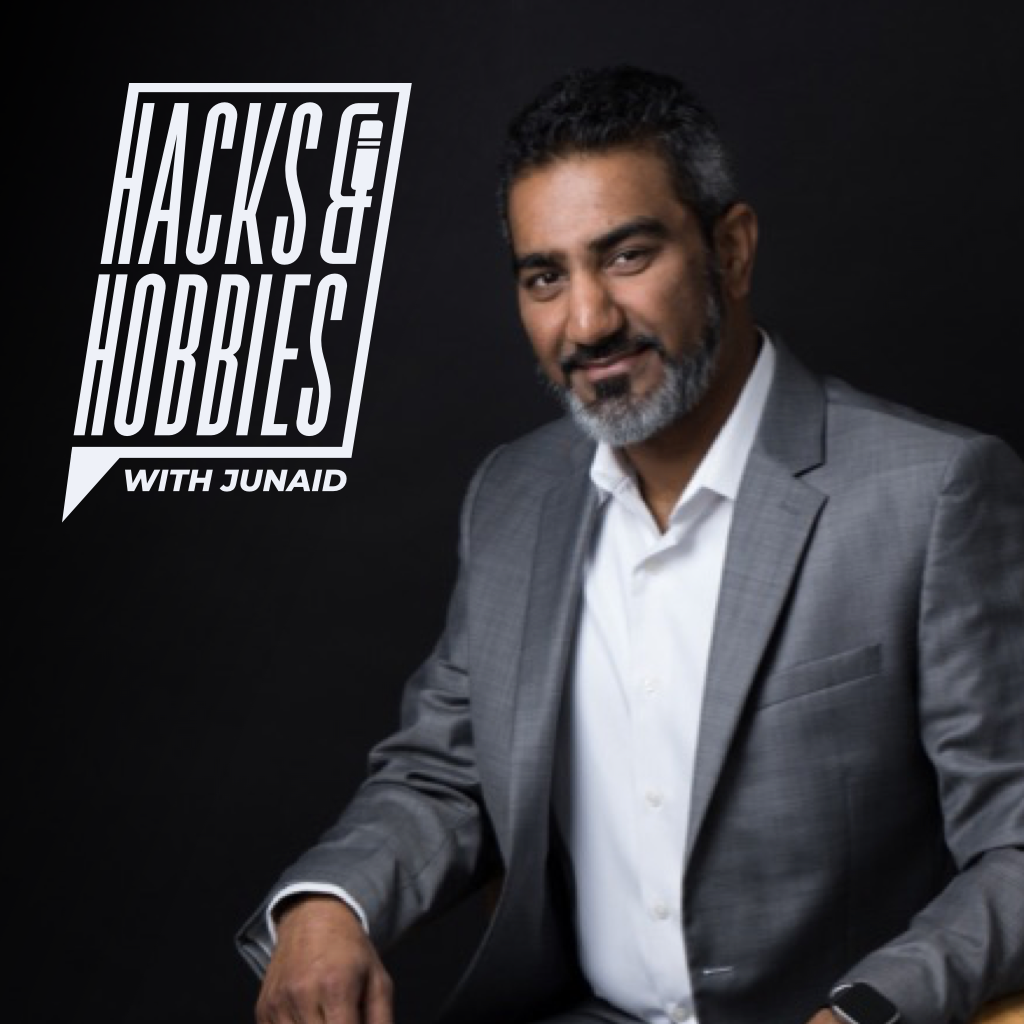
What Podcasting Taught Me About Community
By Junaid Ahmed
I started this podcast completely alone.
In my car. Talking to myself. On a headset connected to an iPad. The Anchor FM app. Nobody could tell I was in a car because the microphone was that good.
For the first year — that was enough.
I didn’t have a studio. I didn’t have guests. I didn’t have sponsors. I just had thoughts that were too loud to stay in my head, and a decision Gary Vee had basically forced on me: document the journey.
What I didn’t know then, and what 500 episodes slowly taught me, is that I had the whole thing backwards.
I thought I was building an audience. What was actually happening — slowly, quietly, without me ever planning it — was that I was building a community. And the difference between those two things is the difference between broadcasting and belonging.
Audience vs. Members
Somewhere around Season 4, I had to ask myself an uncomfortable question. I had hundreds of episodes. Listeners. Downloads. But was I actually building a community?
Jillian Benbow runs community experience at SPI Pro and has been doing this work for over a decade. She said something that stopped me cold: “A community is not full of an audience. A community is full of members.”
Audience and members. Two completely different things.
An audience receives. Members participate. An audience is counted. Members are known. An audience can disappear overnight when the algorithm shifts. Members stick because they have skin in the game.
And here’s the mistake almost everyone makes: thinking that if you build something good enough, the community will just show up. Julie Riley manages a 25,000-member community at StreamYard and put it plainly: “This is not a Field of Dreams. If you build it, they will come — that is not how this works.”
You have to go where people already are. You have to show up first. You have to give before you ask for anything.
I was doing some of that. But I didn’t fully understand why it worked until I started really listening.
The Silo Moment
Dan Bennett grew up in Flint, Michigan, became an engineer, left to tour with a band, and eventually built a company helping entrepreneurs look and sound great on camera. He described something I’ve thought about ever since.
Imagine a bunch of farm silos. All standing close together. But every person inside is sealed off — working alone, building alone, thinking they’re the only one grinding. Nobody can see each other. Nobody knows help is right next door.
Then something acts like a loudspeaker. And everyone sticks their head out at the same time.
“We’re like: oh, there’s one over there. There’s another one. And we started realizing — through community and networking — yeah, we’re not alone.”
That’s what podcasting did for me.
2017 — the year before I launched Hacks and Hobbies — I rode 1,500 miles on my bicycle. Mostly solo. Long rides in Virginia, early mornings, just me and my thoughts. I was building the mental infrastructure to believe I could show up consistently for something hard.
Then a cycling group entered the picture, and suddenly I wasn’t solo anymore. That community was the practice run for everything that came after. I stuck my head out of the silo. I never fully went back in.
Community as Survival
One of the most powerful things I heard across 500 conversations came from Eden Liu.
She had been living in New Orleans — building her whole life there. Her community, her identity, her sense of self. And then her family needed her, and she moved back to Arkansas.
She said: “Doing the podcast and getting to be a part of it was like the one thing that kept me hanging on by a string. I’m not even kidding. That experience really saved my life in some ways.”
Not helped. Not supported. Saved.
William Attaway — leadership expert, 25 years coaching executives — traced the entire arc of his life to a single moment. A high school teacher noticed him. Watched him. Asked good questions. And one day, invited him to a leadership conference.
That’s it. One person paying enough attention to see potential that William couldn’t see in himself yet.
He said: “Great leaders are constantly looking and listening — watching, with radar attuned — for people who have potential that is yet unrealized.”
William is now that person for others. The chain of community continues. That teacher’s single act of showing up keeps rippling outward decades later.
Give First. Always.
Here’s the counterintuitive truth I kept seeing across every season, every guest, every conversation.
The people who built the strongest communities didn’t do it by building. They did it by giving.
Hala Taha got fired from a job she wasn’t even being paid to do. Spent years building something that got pulled at the last minute. Went into corporate. Launched her podcast in 2018 with zero expectation of money. By episode 2, she had her first volunteer. By episode 8, she had ten people working for free — just because the energy was magnetic.
She didn’t sell anything for two to three years. Just showed up, gave value, built 4,000 to 5,000 fans who were obsessed with the show. The DMs from those fans kept her going more than any download number ever could.
Alex Sanfilippo, who built PodMatch, said it cleanest: “Seek to be a person of value, not a person of profit. When you turn your full focus to profit, it turns into a game where you forget there are human beings involved.”
That philosophy is the foundation of PodGlue. The episode is not the product. The relationship is the product. The episode is proof that the relationship happened.
The Long Game Is the Only Game
DJ Strick had been on radio for fifteen years before he found his voice. Fifteen years of practicing, listening to his own air checks in the car, refining. He told me: “The hack is understanding that content creation is a long game. Get into it understanding that you’re going to put five years into this work.”
Hala had 3,000 to 4,000 downloads a month for two full years before growth happened. Most people quit at month four.
Alex Sanfilippo spent nine months “perfecting” PodMatch before launch. In hindsight, wasted time. His advice now: start ugly. The community will tell you what to fix.
The long game isn’t passive patience. It’s consistent giving. Every week you show up and share something useful is another week you’ve told your community: I’m still here. You can count on me.
That compounds.
What 500 Episodes Actually Taught Me
The cycling team I sponsored. The unconventional leaders group that met on Zoom every single day at 4pm Eastern throughout 2020 — 10 to 15 of us talking through what we were going through as leaders. The guests who gave an hour of their time. The listeners who DM’d after an episode to say it hit different.
None of that is a metric. All of it is a relationship.
And relationships compound the same way consistency does.
Community is not a strategy. It’s a posture. It’s the decision to show up — consistently, vulnerably, generously — and trust that the right people will stick their heads out of the silo.
I started this podcast talking to myself in a car. Nobody was listening.
But I showed up the next week. And the week after that.
And somewhere in those 500 conversations, I stopped talking to myself.
Junaid Ahmed is the host of Hacks and Hobbies and the founder of PodGlue. He considers all 500+ of his guests co-authors of everything he’s built since 2018.
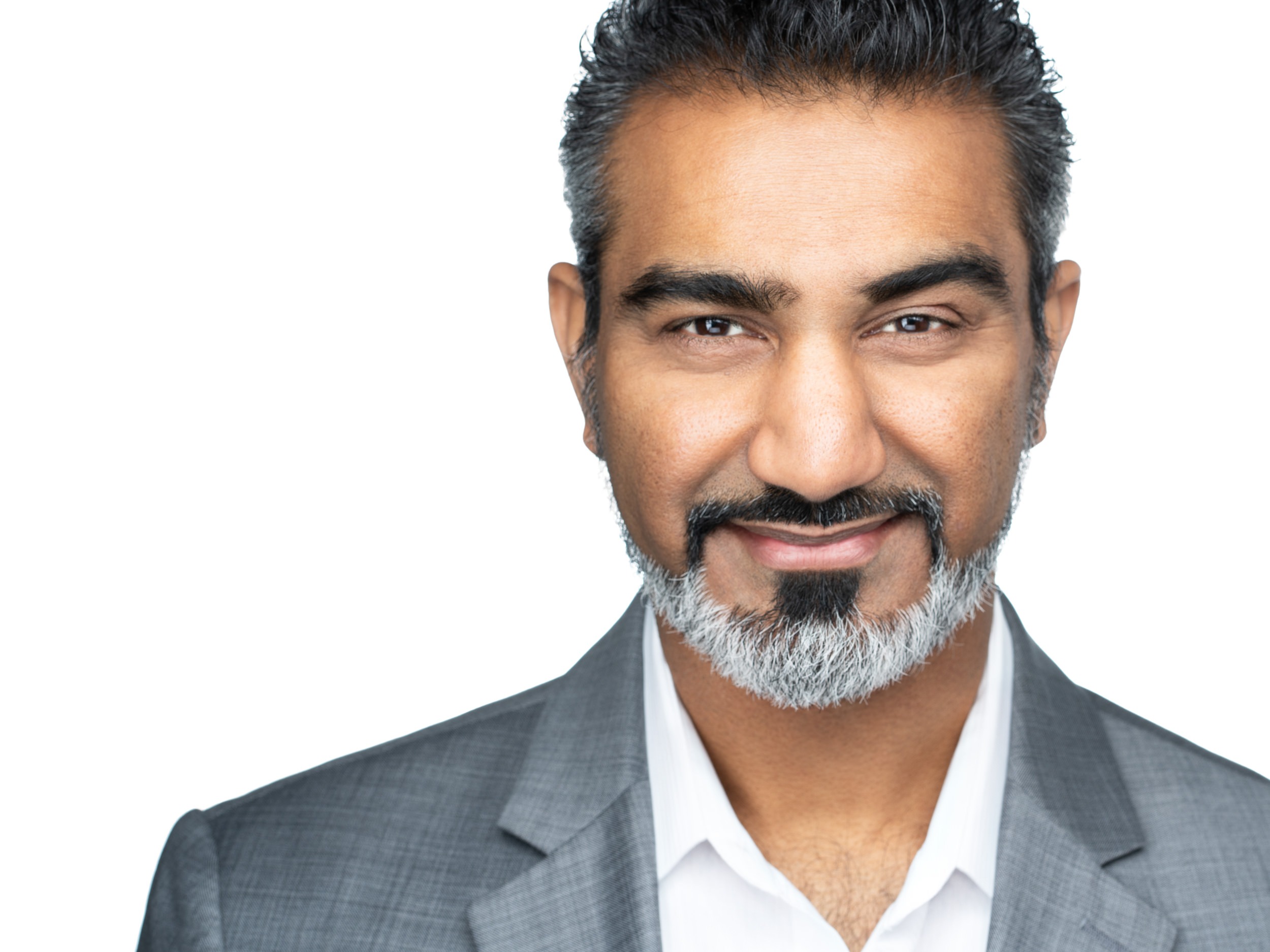
Junaid Ahmed is a multi-passionate creator, storyteller, and home studio architect who believes your voice can change your world. As the host of Hacks and Hobbies, he dives deep into the journeys of people turning passion into purpose — from garage inventors to global entrepreneurs.
The podcast began as a simple idea: record honest conversations about side projects, creativity, and the hustle behind the scenes. Years later, it’s become a movement — showcasing the real, raw, and inspiring stories of everyday innovators.
Whether he’s building pro-level studios or geeking out over podcast gear, Junaid’s mission is clear: help people show up with confidence, clarity, and character.
🎧 New episodes weekdays. New perspectives in every story.